We Cannot Wait for Disaster: Why We Are Mapping Cape Town’s Townships and Informal Settlement Fire Hydrants
South Africa has been warned to prepare for hotter, drier conditions as a very strong El Niño develops. For Atlantic Fire Services, that warning reinforces something we already know from working on the ground: we cannot wait for a fire to expose weaknesses in our firefighting infrastructure. We need to find them now.
A fire does not wait for a hydrant to be uncovered from beneath concrete and rubble.
It does not wait for a vandalised hydrant to be repaired. And it does not give firefighters extra time to search in darkness for a water point that is difficult to see.
At Atlantic Fire Services, this is exactly why we have started intensifying our Fire Hydrant Cleaning & Maintenance Programme.
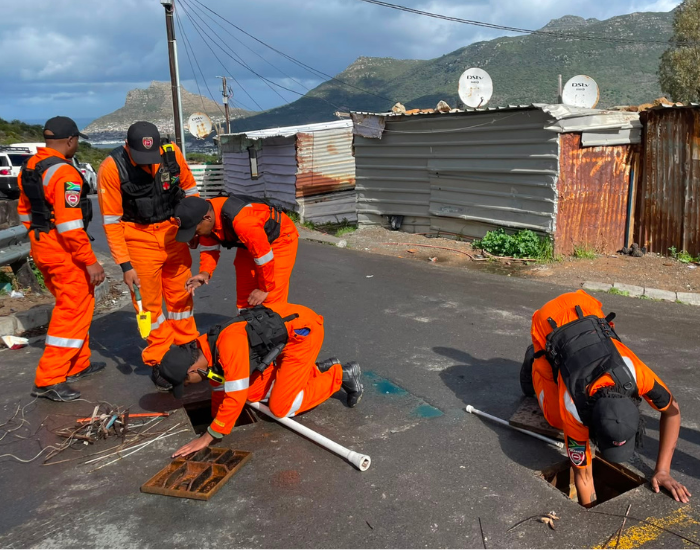
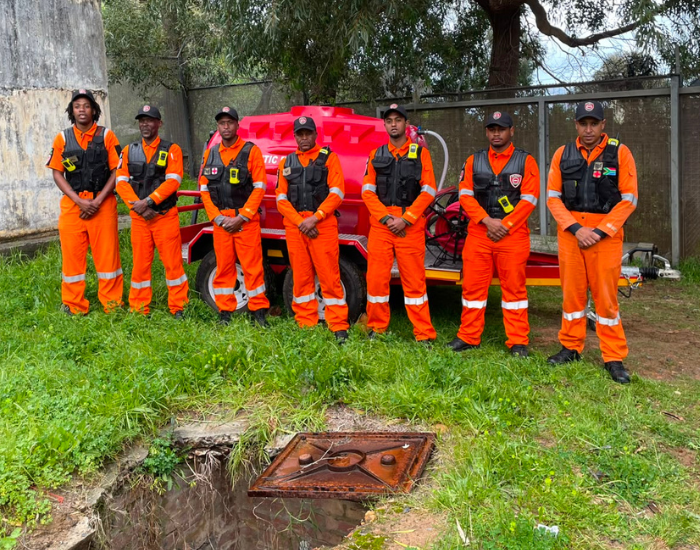
Our teams are identifying, cleaning, testing, repainting and mapping hydrants while conducting risk assessments in the surrounding communities.
What we are finding confirms why this work is urgent.
A Warning We Cannot Ignore
As we move towards the 2026/27 summer, the warnings are becoming increasingly serious.
The South African Weather Service has warned that a very strong El Niño is developing. Its latest forecasts indicate that below-normal rainfall and above-normal temperatures are the most likely conditions over much of South Africa during the coming months. SAWS has also cautioned that severe heatwaves could occur more frequently if the expected dry conditions materialise.
For the Western Cape, the warning has particular significance.
The Western Cape Government has identified increasing temperatures, potentially extreme heat, increased fire risk and pressure on water resources among the risks facing the province. It has also noted that the fire risk is being compounded by a drier winter.
In fact, parts of the south-western Western Cape recorded their lowest July rainfall on record in 2026, with Cape Town International Airport receiving only 14.4 mm — about 16% of its July average.
For us, these warnings cannot simply become another weather headline.
We Cannot Wait for the Fire to Find the Problems
We work in communities where homes can stand extremely close together and where a single fire can threaten multiple structures within minutes.
If the coming months bring hotter and drier conditions, we need to ask some difficult questions now:
Where are the fire hydrants?
Can firefighters find them quickly?
Are they accessible?
Are they working?
Can they be seen at night?
Have they been vandalised or obstructed?
Those are not questions we want answered for the first time while homes are burning.
We need those answers before the emergency begins.


What We Are Finding on the Ground
Our work has already shown how easily critical firefighting infrastructure can become compromised.
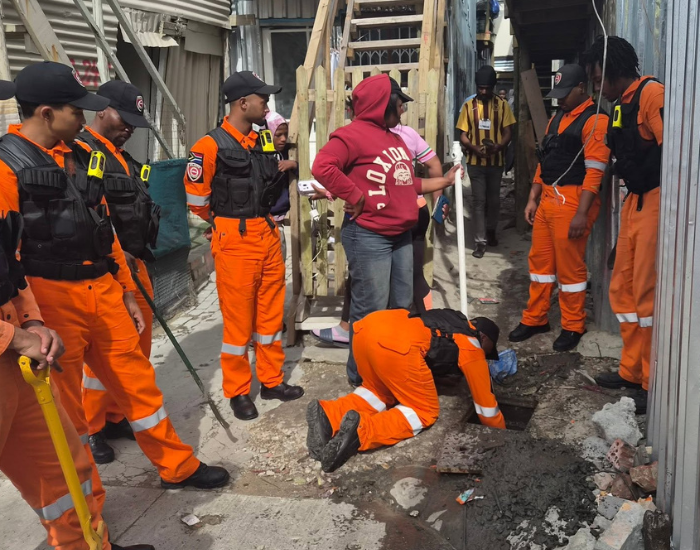
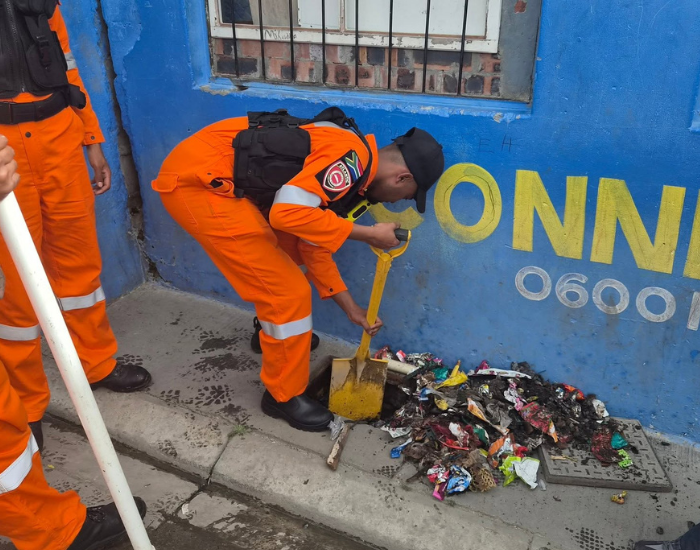
We have encountered hydrants affected by vandalism, surrounded by debris, difficult to identify and, in some instances, hidden beneath concrete and rubble.
Imagine arriving at a rapidly spreading community fire and discovering that a hydrant believed to be nearby cannot be found or accessed.
In an emergency, minutes matter.
That is why we are systematically working through communities to identify these problems before they become part of a disaster.
Cleaned. Tested. Painted. Mapped.
Our approach is practical:
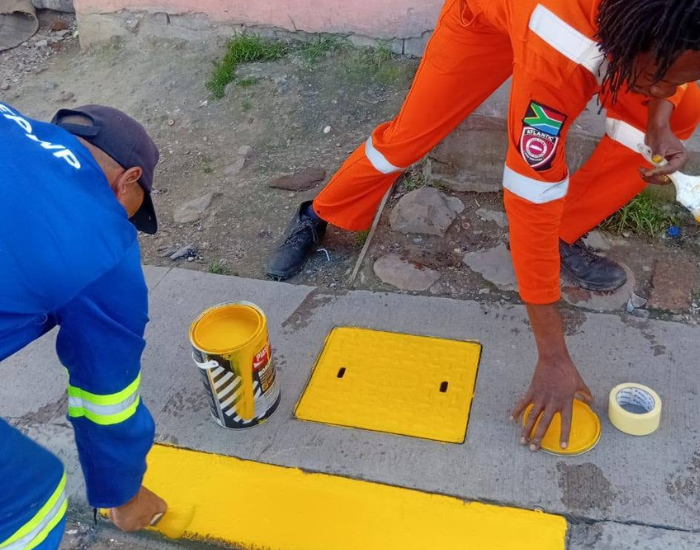
Clean it. Test it. Paint it. Map it. Assess the surrounding risk.
Hydrants are cleaned and the surrounding area cleared where possible.
They are tested to establish their condition and identify potential problems.
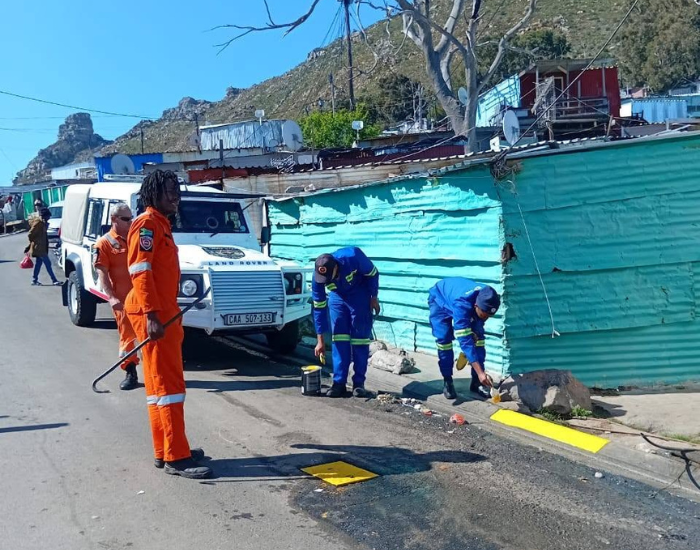
We repaint hydrants with reflective paint, improving their visibility — particularly at night, when firefighters may already be working against darkness, smoke and extremely difficult conditions.
And importantly, we map them, creating a clearer picture of where this critical firefighting infrastructure is located.
Every point added to that map represents something potentially far more important than a location.
It represents access to water when a community may need it most.
Mapping the Risk, Not Just the Hydrants
Our work goes further than putting coloured markers onto a map.
We conduct risk assessments of the surrounding environment.
We look at access routes, dense housing, obstructions, combustible material, hydrant accessibility and other factors that could complicate an emergency response.
This gives us a much clearer understanding of the vulnerabilities within an area.
It also allows us to identify problems while there is still time to do something about them.
Vandalism Is More Than Damage to Infrastructure
One of the issues that concerns us greatly is vandalism.
A vandalised hydrant is not simply damaged infrastructure.
During an emergency, it could mean that an important firefighting resource is compromised at exactly the moment a community needs it.
Where we encounter vandalised hydrants, our teams clean and test them where possible and identify problems requiring further attention.
But maintenance alone will not solve vandalism.
Communities also need to understand what these hydrants represent.
Protecting a fire hydrant means protecting a resource that could one day help protect your home, your neighbour’s home or an entire section of your community.
Fire Prevention Starts Long Before We See Smoke
Through our work across vulnerable communities, we continue to learn the same lesson:
Successful fire response starts long before the emergency call.
It starts when we train community volunteers.
It starts when we place fire extinguishers into high-risk areas.
It starts when we identify hazards and create fire breaks.
It starts when we ensure emergency routes remain accessible.
And it starts when we know where critical firefighting infrastructure is located and whether it can be accessed.
Fire Hydrant Cleaning & Maintenance is therefore not an isolated project.
It forms part of our wider strategy to help communities become better prepared to prevent, contain and respond to fires.
Preparedness Has a Cost. Disaster Costs Far More.
This is also where funding becomes critical.
Cleaning and painting one hydrant may seem like a relatively small intervention.
But multiply that work across communities containing hundreds or thousands of homes and the scale becomes very different.
Our teams need transport. We need cleaning equipment and materials. Reflective paint needs to be purchased. Hydrants need to be tested and mapped. Risk assessments need to be conducted. Areas need to be revisited, and the programme needs to expand into other high-risk communities.
Funding this project is not simply paying for paint, equipment or fuel. It is funding preparedness.
Every donation and partnership gives us greater capacity to identify vulnerabilities before a fire exposes them.
And when firefighting infrastructure is visible, accessible and ready for use, firefighters are better positioned to respond when every minute counts.
In communities where fire can move rapidly from one structure to another, that preparedness can ultimately contribute to protecting homes, livelihoods and lives.

The Time to Prepare Is Now
We cannot predict exactly where the next major fire will occur.
We cannot say exactly what the coming summer will bring either. El Niño does not guarantee drought in every part of South Africa, and SAWS continues to emphasise uncertainty around its regional effects.
But we have been warned of increased fire risk in the Western Cape, potentially extreme heat and pressure on water resources.
That is enough reason for us to act.
Somewhere today, there may be a hydrant hidden beneath rubble.
Another may have been vandalised.
Another may be impossible to identify quickly after dark.
We cannot wait until houses are burning to discover these problems.
At Atlantic Fire Services, we want to find them now.
We want to clean the hydrants, test them, improve their visibility, map their locations, assess the surrounding risks and highlight problems requiring further intervention.
Because when the warning signs are already in front of us, preparedness cannot wait.
Help Us Prepare Before the Fire Starts
Through donations, funding and partnerships, you can help Atlantic Fire Services expand our Fire Hydrant Cleaning & Maintenance Programme into more high-risk communities.
Your support helps put teams on the ground before disaster strikes.
The hydrant we clean, test and map today could form part of the response that protects homes and saves lives tomorrow.